A capped duct in a laundry area marked future use is telling a specific story. The builder ran ductwork to that spot because New Jersey's residential code calls for an exhaust duct wherever space for a clothes dryer is provided, even if a dryer had not arrived by the day the house was occupied. When no dryer showed up in time, the duct got capped or plugged where it starts so debris and outside air would not travel down an unfinished run, and it sat waiting for someone to move in and buy a dryer. That gap between framing and the first load of laundry is where a duct nobody has checked in years can pick up problems that only surface once a dryer is finally connected to it.
What can happen to a duct while it waits
A capped run behind drywall is an easy thing for other trades to forget. An electrician fishing cable, a cable installer running coax, or a plumber snaking a line through a wall cavity can end up treating an open duct as the path of least resistance, and a crushed section or a coil of wire left inside is not something a homeowner sees until the dryer is running and lint starts backing up instead of moving outside. Framing scraps, drywall dust and stray insulation are common finds inside a duct that sat open during finish work, and any of them narrows the airway enough to slow exhaust and trap lint further down the line.
The material behind the wall matters too
The fixed duct run behind the wall or under the floor is supposed to be rigid or corrugated semi-rigid metal, not the flexible foil or vinyl duct sold for the last few feet at the dryer itself. A run built with the wrong material during construction, maybe because a trade grabbed whatever was on the truck, tends to show up as thin, dented or crushed sections once the cap comes off, and any of that gets swapped for the correct material before the run passes more than a light test. A tag left on the capped end, if one survived, sometimes notes what material was used and how the run measures out, and checking it first can save a second trip.
The outside termination needs its own check
The point where the duct exits the house carries its own list of items to check before a dryer ever runs through it. A dryer termination should have a damper that opens under airflow and falls closed when the dryer stops, keeping outside air, insects and rain out of the duct. It should not have a screen or mesh across the opening, since lint collects on a screen within a season or two and turns a working vent into a fire risk. A cap rusted shut, a damper hanging open on a bent hinge, or a bird's nest wedged into the hood are all things that show up on a first look, before any dryer gets plugged in.
Matching the run to the dryer's limits
Every dryer comes with a maximum duct length set by its maker, and that figure accounts for every foot of straight duct plus the added resistance of each elbow along the way, usually called equivalent length. A run built long during construction, maybe because the laundry sits far from an exterior wall, can exceed what a standard dryer is rated for once elbows and vertical runs are counted. A run longer than 35 feet of equivalent length is supposed to carry a label within six feet of the connection point noting its actual length, so whoever hooks up a dryer later can compare that length against the dryer's rated maximum and decide if a booster fan or a shorter path is required.
The connector from the dryer to the wall
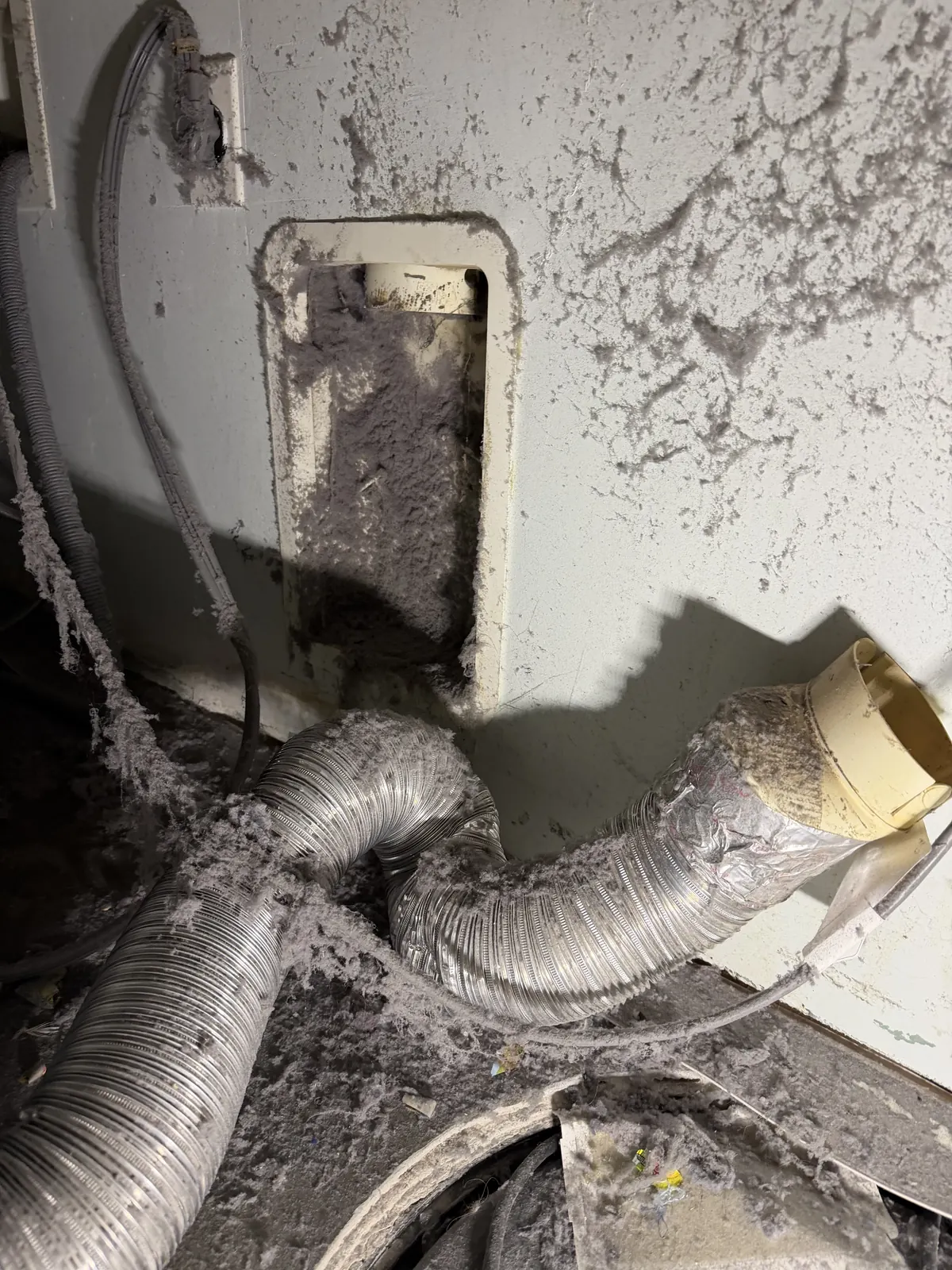
The last few feet between the dryer and the wall connection is not part of the fixed duct run, and it carries its own separate rule. That connector should be a single listed transition duct rather than a run pieced together from more than one section, and it should not exceed eight feet in length. Foil-faced vinyl duct sold at hardware stores does not belong here since it sags, kinks and traps lint at every low point. The transition duct should also never be pushed up into the wall opening to make it fit a tight space behind the dryer, since crushing it at the connection point cuts the airway down to a fraction of what the duct was sized for, right at the spot the dryer works hardest to push air through.
How dryer vent installation finishes the connection
Once the run, the termination and the connector have all been checked, Dryer Vent Installation covers pulling the construction cap, confirming the duct is clear its full length, and setting the transition duct correctly at both ends, clamped to the dryer and to the wall fitting without any of it forced into the opening. If lint, drywall dust or a stray tool has collected in the run since it was capped, that gets cleared out as part of the same visit rather than left for Dryer Vent Cleaning to handle later. A run that was crushed or used as a chase by another trade gets opened up and corrected before the dryer goes anywhere near it, since running a dryer against a partly blocked duct is how lint backs up and heat has nowhere to go.
What a visit looks like
In Bound Brook, where Census estimates put more of the current housing built in the 2010s than in any decade since the 1950s, a lot of these capped laundry ducts are still close to new, and checking one before the first dryer goes in is usually a matter of confirming what is already there rather than fixing years of neglect. Older stock around Bridgewater tells a different story, where a capped duct might have waited through more than one owner and a couple of unrelated renovations before anyone connected a dryer to it. Either way, a visit starts with pulling the cap, running a light and a camera through the duct to check its condition end to end, and measuring the run against the dryer's rated maximum before any connection is made. Findings and any corrections go on the written estimate, so what gets opened, cleared or replaced is settled before the first load of laundry runs through it.