A Victorian in North Plainfield built before the forced air furnace existed almost certainly started out heated by a gravity system, and the basement often still shows the bones of it even after decades of upgrades. The question a homeowner asks is whether those big round pipes rising from where the old furnace sat can carry a new system's air, and the answer splits two ways. The pipes themselves rarely work as supply ducts once a blower is added. The chases they run through, and often the decorative grilles at the floor or ceiling, can frequently stay.
How a gravity furnace moved air
A gravity system had no blower anywhere in it. A coal or early gas furnace sat low in the basement, and warm air rose on its own through large round pipes, often a foot or more across, angled upward to floor or ceiling registers in the rooms above. Cooler room air sank back down through a separate large return and returned to the furnace to be heated again. The whole system ran on the simple physics of warm air rising and cool air sinking, with pipe size doing the work that a blower's horsepower does today. That is why the pipes are so much larger in diameter than anything installed now: a system with no fan behind it needs more open area to move the same volume of air.
Why the old pipes rarely suit a blower-driven system
Add a blower to a furnace and the pressure in the duct system changes completely. A pipe sized for slow, convection-driven air movement becomes too large and too leaky for a system that pushes air with real static pressure behind it. Seams on these old pipes were often crimped or riveted rather than sealed, which mattered little when gravity did the moving but leaks air badly once a blower is pressurizing the line. Most gravity systems also had a single large central return rather than a return duct matched to each supply run, so even where a riser survives intact, there is usually no equivalent return path sized for a forced air furnace or central air. An Air Duct Installation almost always means new sheet metal sized to the blower, not a refit of the original pipe.
Which old runs can still serve as chases
The part worth keeping is the opening the old pipe runs through, not the pipe itself. The National Park Service's guidance on heating and cooling in older houses points to reusing existing chases wherever possible, and that applies directly here. A vertical bay in a wall or a floor cavity that carried a gravity riser from basement to second floor can usually carry a new round or rectangular duct run in the same path, which means the plaster, trim and flooring around it stay closed up instead of getting cut open somewhere new. On a visit, we check which chases run cleanly from the basement to a register location and plan the new Air Duct Installation through those same paths before opening anything else.
Grilles in good shape can stay
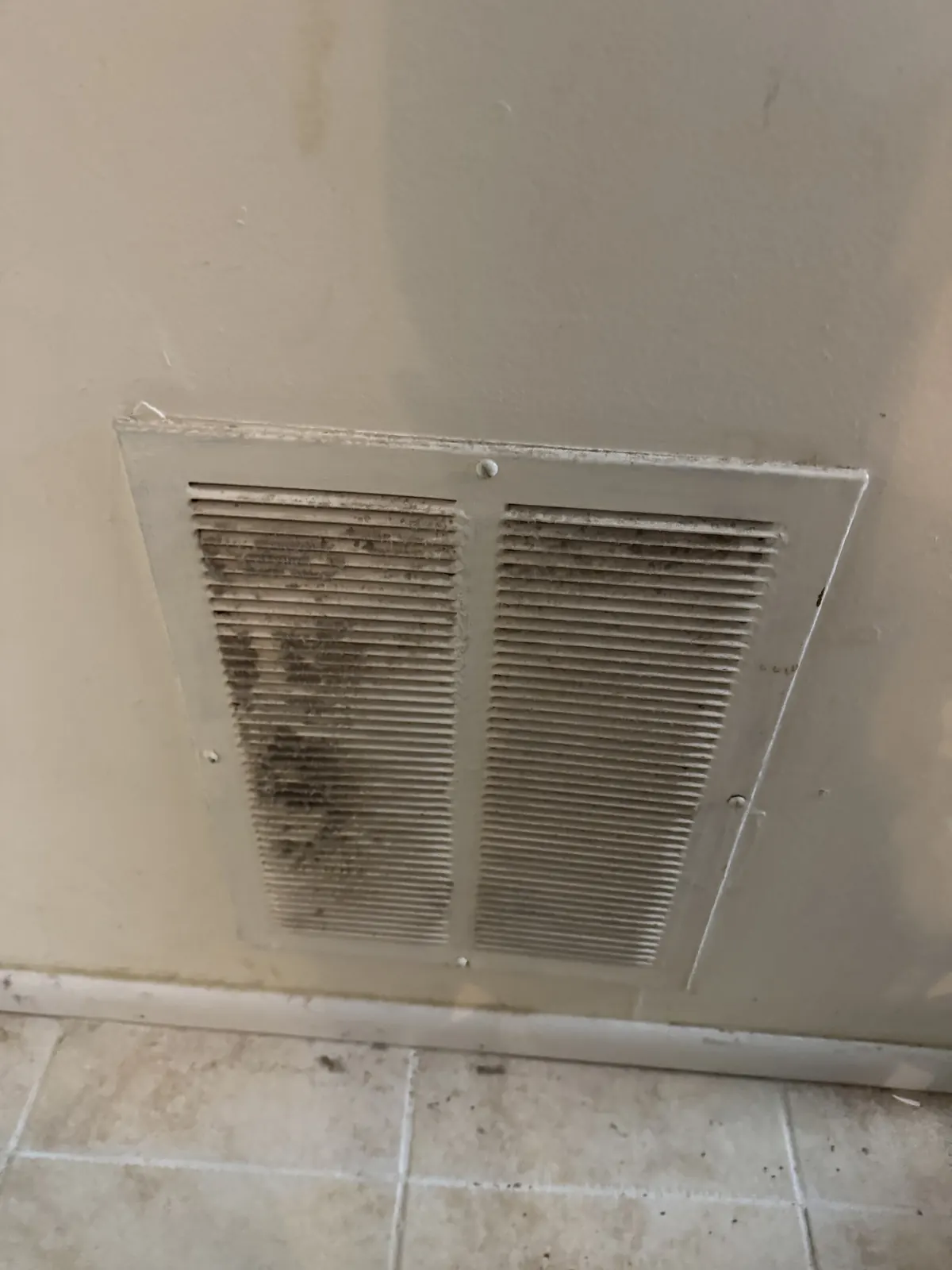
Houses in the Washington Park Historic District, built between 1868 and 1917 in Second Empire, Queen Anne and Shingle styles, often still carry their original floor and ceiling grilles, cast iron or nickel-plated patterns that were part of the house's finish work, not an afterthought. If a grille's opening lines up with a new register boot and the frame is not cracked or warped, there is no reason to replace it. Keeping it preserves a detail that matches the house's age, and it is one less piece of trim a crew has to source or match. The check is simple: measure the grille opening against the new duct's output size, and if they match or can be adapted with a transition boot, the old grille goes back in.
The white wrap on old pipes waits for testing
A lot of these old gravity pipes carry a corrugated wrap, often white or gray, applied decades ago as insulation around the metal. That wrap was common in an era when asbestos-containing insulation was widely used for exactly this purpose, and it should not be assumed safe or unsafe without testing. The same caution that applies to old pipe wrap elsewhere applies here: leave it undisturbed, do not cut, sand or pull it apart to check, and have it tested before any demolition touches it. A duct crew does not test for asbestos, and any wrapped section gets flagged on the estimate as work that waits on that result rather than something opened on the spot.
What a visit looks like
We walk the basement and trace each old pipe to see where it goes, noting which chases are straight enough to carry new duct and which runs dead-end or branch in ways a modern system would not use. Grilles upstairs get checked against likely register sizes. Any wrapped pipe gets marked for testing before it is touched. From there, the written estimate separates new Air Duct Installation work through the reusable chases from any Air Duct Repair needed on sections of newer ductwork added during a past partial upgrade, so a homeowner in North Plainfield or Bridgewater can see exactly what is being built new, what is being kept, and what is waiting on a test result before it moves at all.