No. An ozone machine run in a basement or tied into the ductwork after a flood does not clean mold out of that system. The EPA has looked at ozone generators sold as air cleaners and found that at concentrations low enough to meet public health standards, ozone does not effectively remove mold spores or other biological material from indoor air, and that ozone at higher concentrations can damage rubber, wire coatings, and fabric before it does anything useful to a mold problem. Its separate flood cleanup guidance pushes the same caution further, urging restraint around chemical treatments and sprays inside ventilation systems rather than treating them as a shortcut past the physical cleanup.
What the ozone pitch promises
The pitch sounds efficient. Run a machine for a day or two, the smell lifts, and the basement seems to have turned a corner without anyone opening a wall or pulling a duct apart. That smell relief is real in the moment, because ozone does mask odor, but masking odor and removing mold are two different jobs. A house in Bridgewater with a few inches of water from the Raritan overflowing its banks, or a finished basement in Bound Brook that took on sewer backup on the east end during Ida, needs the mold dealt with at the material it is growing on, not just the air around it.
What ozone does, and does not do, indoors
Ozone is a reactive gas, and that reactivity is exactly why the EPA flags it as risky for an occupied house. It breaks down some odor compounds, which is where the perceived improvement comes from, but it does not reach into porous material, insulation fibers, or the silt that settles on duct liner and metal after flood water recedes. Mold growing on wet drywall, carpet pad, or fiberglass duct insulation stays there after the machine shuts off, because ozone gas moving through a room is not the same as physical removal of the material the mold is attached to. The EPA's own guidance on ozone generators is clear that concentrations high enough to kill mold on contact also exceed limits considered safe to breathe, which is not a tradeoff anyone should accept in a basement that people and pets still walk through.
What a flooded duct system holds
Flash flooding off the Watchungs into a Watchung or Warren basement, or river flooding along the Raritan into a Bridgewater crawlspace, leaves more than standing water behind. Silt and fine sediment settle inside return trunks and along the bottom of supply runs. Fiberglass duct liner and any insulation wrapped around metal ductwork soaks through and does not dry from the inside once water has reached it. A furnace or air handler that sat in water holds the same problem in its cabinet and coil. None of that comes out with a gas treatment. It comes out by hand, by vacuum, and in the case of wet insulation, by removing the material and replacing it, because wet insulation left in place keeps feeding mold growth regardless of what runs through the air around it.
Why the metal gets cleaned, not fumigated
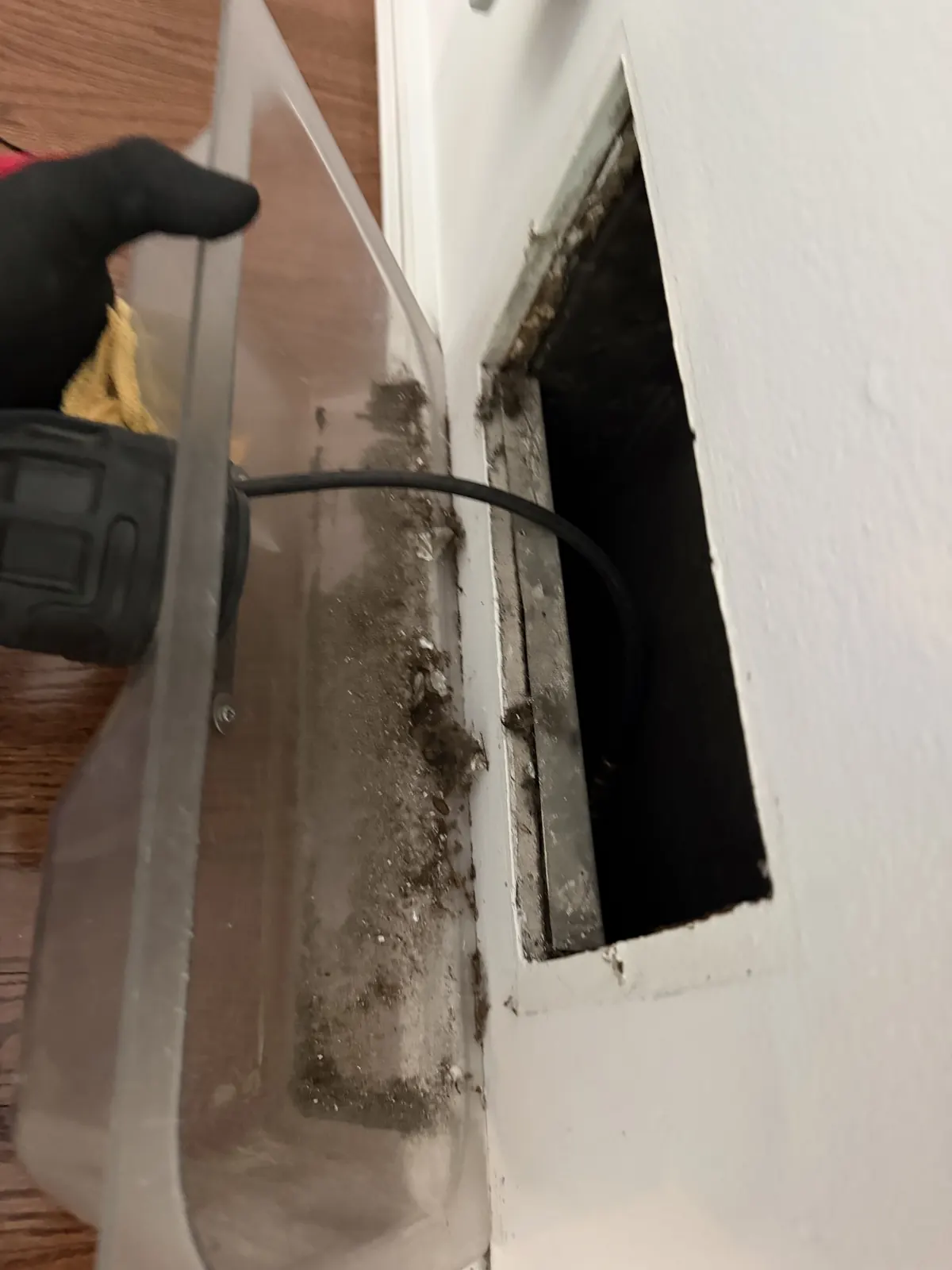
The duct sections that survive a flood intact, meaning bare metal without wet insulation that has to be cut out, get cleaned mechanically. That means agitation and vacuum extraction to pull silt, debris, and mold-contaminated dust out of the trunk and branch lines, the same approach the EPA describes for air duct cleaning generally, just applied to a system that came through standing water instead of ordinary household dust. Air Duct Cleaning on that bare metal, paired with Air Duct Repair on any crushed or disconnected sections the flood knocked loose, addresses what is sitting inside the ducts. A machine filling the room with gas while that silt and residue sit untouched inside the metal does not change what happens the next time the blower kicks on.
Where mold treatment and removal fits
Mold Treatment and Removal covers the duct system and the connected HVAC equipment once the basement has dried out, not before. Treating a system while water is still present, or while a sump pump is still running to keep a crawlspace from refilling, just gives mold a damp surface to return to right after. The order that holds up is drying the space first, removing anything porous that soaked through, cleaning the metal that stays, and then treating the duct system and the furnace or air handler it connects to. An ozone machine does not replace any one of those steps, and running it in place of them usually means paying for equipment time while the actual contamination sits exactly where it was.
What a visit looks like after the water recedes
We start by confirming the space is dry and that the moisture source, whether a sump failure, a sewer backup, or river overflow, has stopped, since treating a system that is still taking on water does not hold. From there we check which duct sections have wet insulation that needs to come out, which runs are bare metal and can be cleaned in place, and what the furnace or air handler cabinet looks like inside. That split, along with where Air Duct Repair is needed to reconnect anything the flood knocked loose, goes on the written estimate before Mold Treatment and Removal starts, so a homeowner in Bound Brook or Bridgewater knows what is being removed, what is being cleaned, and what is being treated, instead of being sold a gas machine as a stand-in for that work.